Dubai, UAE: Health authorities in the UAE have called on schools, universities and employers to be considerate of the needs of thalassaemia patients and allow them time off for their periodical treatment.
“Due to a lack of awareness in the UAE about the genetic blood disorder thalassaemia, most organisations are unaware that sufferers have to undergo a blood transfusion every three to four weeks,” an official from the Dubai Health Authority (DHA) said on Tuesday during the signing of an MoU between the DHA and World Security.
The MoU aims to place thalassaemia patients in the UAE with employers who are mindful of their condition.
Thalassaemia patient Reem Mohammad, a 22-year-old Emirati, told Gulf News that she dropped out of university because the staff and professors did not understand her condition.
“I left university because when I had to miss classes to get a blood transfusion my professors would consider it an absence even after I presented them with a sick note. I tried explaining to them what thalassaemia was and that I had to get a blood transfusion every three weeks. I think that if you don’t have a background at all then it is difficult to understand. I eventually dropped out because if I exceeded the 20 per cent allowable absence my grades would be reduced.”
Dr Fatheya Al Khaja, acting director at the Thalassaemia Centre, said that thalassaemia requires patients to have regular blood transfusions as well as daily injections to counter the risk of iron overload caused by these transfusions. High iron can cause irreversible damage to the kidney, heart and other vital organs.
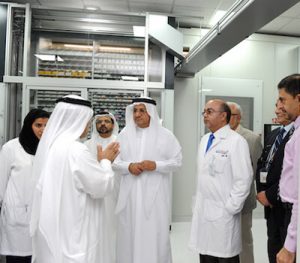
The agreement was signed by Abdullah Al Khayat, CEO of Latifa Hospital, and Mahmoud Mohammad Ameen, CEO of World Security, at the DHA’s Thalassaemia Centre which is located in the premises of Latifa Hospital.
By signing the MoU, World Security will ensure that people with the condition who work for them will enjoy a comfortable work environment and have an additional two days off every month so that they can undergo regular blood transfusions every three to four weeks.
Ameen said that World Security will accept applications from thalassaemia patients from all nationalities in different departments, including accounting, marketing, sales, engineering and finance.
“Organisations, especially governmental departments, should give thalassaemia patients a chance to work. Regular employees have 27 days’ sick leave a year so where is the harm of considering having to go and get a blood transfusion as part of the sick leave. I am sure that doing so will not affect the productivity of that organisation in anyway,” he added.
The UAE has a high prevalence of thalassaemia, a life-long condition that is expensive to treat.
“If both parents are carriers of thalassaemia there is a 25 per cent risk per pregnancy that the child will have thalassaemia. In the UAE 12 out every 100 people will be a carrier of the disease. We are in a region that has a high frequency of thalassaemia due to the high rate of inter-family marriage. The rate of thalassaemia in the UAE is expected to be between three and eight per cent and those affected by it live with it all their life. The cost of annual treatment can vary from Dh200,000 to Dh300,000,” said Dr Fatheya.
© Gulf News










 Twitter