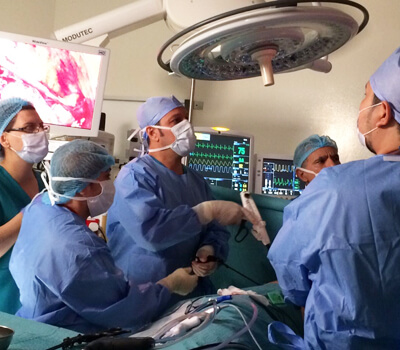
Sharjah, UAE: University Hospital Sharjah (UHS) is an integrated medical centre, which is dedicated to several key specialties by uniting a multidisciplinary team of physicians, nurses and health-care professionals. “The number of people suffering from a disease that damages sections of the lung and makes it difficult to breathe, is on the rise in the UAE,” warns a senior surgeon from UHS. “The disease makes the patient feel fatigued because of a lack of oxygen with pressure on the chest and a bloated feeling.”
Dr Adel Aswad, Senior Consultant Thoracic, Vascular and Endovascular Surgeon at UHS revealed that due to the growing number of such cases, the hospital plans to make the thoracic surgery department into a Referral and a Centre of Excellence in the UAE. This is yet another example of University Hospital Sharjah anticipating growing health problems and taking the next necessary steps to address them.
The surgeon recently conducted an operation using new techniques at UHS to remove multiple ruptured air sacs laparoscopic ally, a minimally invasive method that does not require the opening of the chest. Key-hole surgeries such as these are uncommon in the UAE as they require expertise and the most advanced medical technologies available.
The patient, Mr Rodrigues, a 42-year-old Argentinian Professor at University of Sharjah, is on his way to a full recovery. Mr Rodrigues was physically fit and active but felt shortness of breath and chest pain after a brief walk. The casualty unit performed clinical and radiological exams to investigate the cause of the pain and discomfort. They discovered Mr Rodrigues had right-sided spontaneous Pneumothorax. The patient was then admitted to the surgical ward and basic diagnostic procedures were done with chest tube drainage. The chest CT scan done showed pre-existing signs of bullous emphysema (large cystic tissue) in both lungs. The second week of examinations showed poor lung-expansion progress with evident air leakage.
Dr Aswad, who has been a surgeon in the UAE for the past 13 years, said “the number of people suffering from such ruptured air cysts in the lungs is high in the country. It is between seven to eight per cent of all thoracic [region of the chest] cases compared to less than two per cent internationally.”
The surgeon said many patients suffering from this affliction are not receiving the necessary treatment because there is little to no awareness about this specialisation: “Lack of awareness will be addressed with the setup of the new centre at UHS,” he said. “I am more than happy with the hospital facilities and the support staff is outstanding,” the surgeon added.
There are many risk factors for this diseases and smoking tops the list as nicotine affects the elastic wall-lining of the lungs. Pollution is another factor: in places where there are a large number of factories, the amount of lung cyst cases is higher. “The disease tends to afflict individuals who are tall and thin as this determines the length and elasticity of the lungs. Other than routine examinations and CRT scans, there is no way to detect this disease. This is why it is often those that are active that cause the cyst to burst, as exercise elevates their breathing intensely. Others have connective tissue diseases, which are congenital or have inherited tendencies that accumulate air cysts in lungs,” Dr Aswad said.
The UHS surgeon explained, “There are usually no symptoms for this disease. When it is discovered during a hospital visit, I advise the patient against climbing high altitudes, over-strenuous exercise and prohibit flying because it is not safe for the patients.”
Dr Adel who has conducted more than 100 operations revealed that this recent surgery utilised a special stapling clamp. This small device is lowered through a tiny incision made in the patient’s body. “It staples the area from which the affected part of the lung was removed. That has to be done or all the air will escape the lung. We inflate the organ to verify that there is no more bubbling and in two or three days of recovery, the patient can go home.”







 X
X Instagram